Terrestrial and Sasquatch Data
with The SE Crew · Sasquatch Experience
PLEASE LIKE, SUBSCRIBE, RATE, AND REVIEW ON ALL PLATFORMS: YouTube, Facebook, Apple Podcasts, Spotify, Spreaker, or wherever you listen!
GET YOUR SASQUATCH EXPERIENCE GEAR FROM THE SQUATCH PRO STORE!
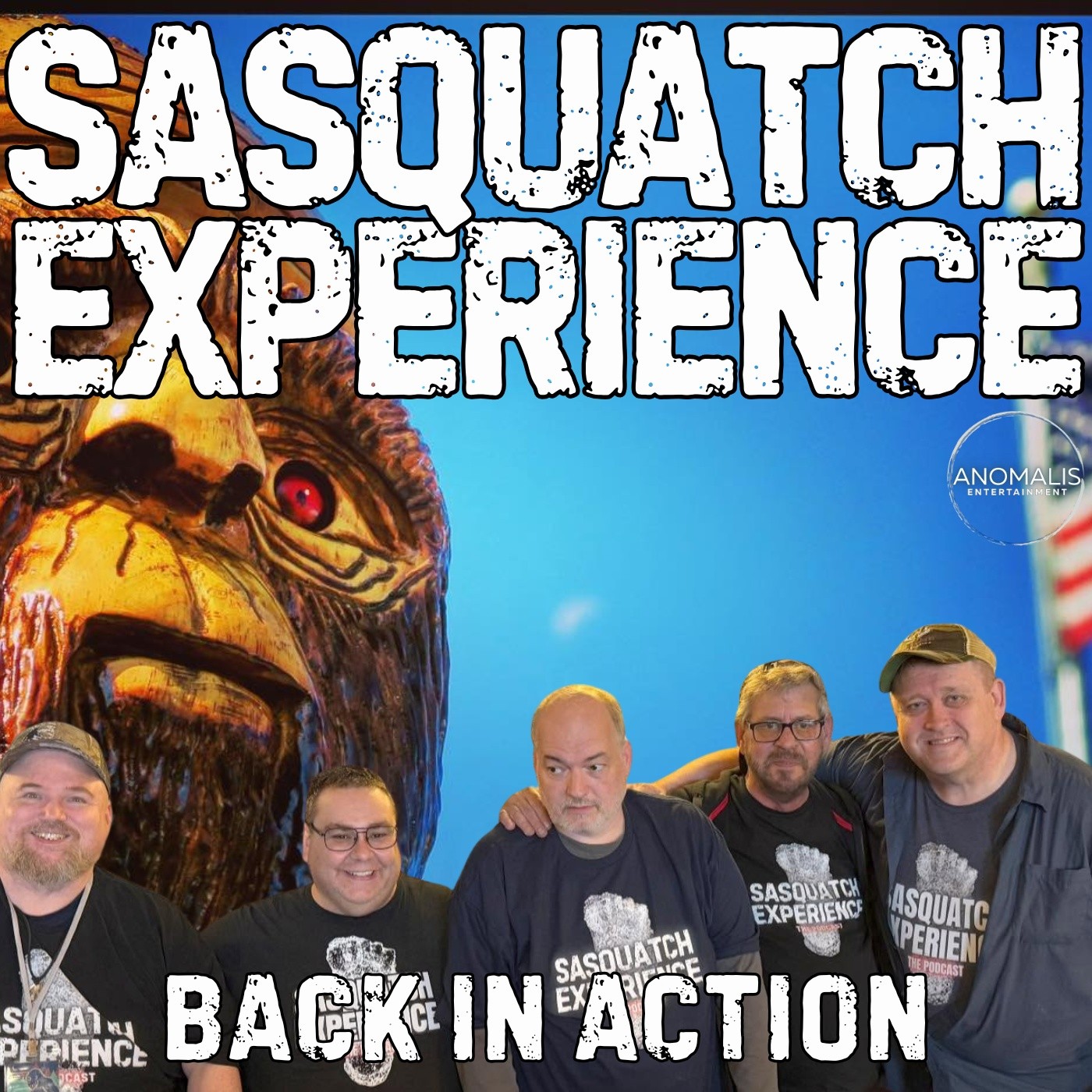
Sean Forker hosts SASQUATCH EXPERIENCE, which also features Matt Arner, James Baker, Vance Nesbitt, and Henry May.
Creative Consultants: Matt Knapp (Bigfoot Crossroads) & Les Sincavage (Xplorers: Seekers of the Truth).
Show Executive Producer: Brian Corbin
Special Thanks to all our Patreons:
The Experiencers: Jeffreylee Matthis, Got Knockers!, Larry Sharpe, Scott Dieterele, and Tom Mihok
Trackcasters: Cindy Brewer
The Hollers: Gail Frederick, David Hickernell, Bryley Hull, Matt Arner, Laurie Nelson, and Lori Worthington
Without their support, this show would not be possible. For as little as $2 per month, please consider becoming one of our supporters on PATREON.
Our show intro music, “It Comes At Night” by Adam Dib, is licensed to us for commercial use. “9-11 Bigfoot Call” is also used under Fair Use. Sean Forker and Gabriel Forker are credited with the intro and exit voiceover work. Sasquatch Experience Trailer music, “It's in the Fog” by Darren Curtis, is used with permission and attribution.
If you’d like to hear a particular topic or guest, EMAIL US!
Check us out:
Facebook | X | Instagram | SasquatchExperience.com
- 00:04Opening disclaimer and Sasquatch Experience intro
- 01:06Welcome Terrestrial from the Sasquatch Data Project
- 04:09How Terrestrial got into Sasquatch research
- 08:19Building the Sasquatch Data Project and moon phase analysis
- 12:21Class A vs Class B reports and data quality control
- 16:28What interview data matters most for Sasquatch databases
- 19:30Fear level, estimated height, and pattern-based analysis
- 21:33Standardizing witness interviews and using unbiased protocols
- 36:57Expanding historical Sasquatch reports and AI-assisted data entry
- 47:08Field research stories, animal reactions, and best seasons to investigate
- 54:15AI in Bigfoot research: benefits, risks, and data workflow
- 59:22How to find the Sasquatch Data Project and closing remarks
Views and opinions expressed by the guests that Sasquatch Experience do not necessarily reflect the opinion of the host, sponsors, or affiliates of the Sasquatch Experience. As always, listener discretion is advised. We got some one or something crawling around out here, and see what it was? Was it a person or an animal. Or I can't know. All I know that my underway came on and I get happened to Glenn and be the thing running across the head good bye man or something. To look by the men. I don't know what it was. Back in two thousand and five, we set out with one goal to give voice to the mystery and those who pursue it. Sasquatch Experience podcast has been your go to source for serious Bigfoot discussion, where we separate fact from folklore. Always grounded in research and respect. We've interviewed eyewitnesses, experts since Skeptic to Like because understanding Bigfoot isn't just about belief, It's about the journey. Nearly two decades later, we're still chasing shadows and sharing stories. The search never stopped. Welcome to the Sasquatch Experience. Hello, Get somebody out. Here, and here we go. Welcome to the Sasquatch Experience, everybody, Monday, August eighteenth, twenty twenty five. And what a great show we have for you all tonight. We've got a full house here as you can see down at the bottom. James Baker, vance Nesbitt our guest tonight, Terrestrial Henry May and Matt Arner from the Allegheny Plateau Project. Great show we're going to have. But before we kick off, just a couple of housekeeping notes. This weekend, Friday through Sunday is the twenty twenty five Pennsylvania Bigfoot Camping Adventure. Myself, Matt and James Baker. We're going to be there sponsoring doctor Jeff Meldrum, all representing Sasquatch Experience, and we'll be speaking at ten am on Saturday. So show up with your selected produce, which, by the way, if you're going to throw anything, make sure it's good so we can collect it. Or Squatch out Hunger, folks, Squatch out Hunger. We still need your help. We've kind of stalled in donations. We've got a lofty goal at twelve hundred and fifty bucks. We need you, so take a minute if you have the time. If you're so inclined, go to the website click on the banner to take you to Squatch out Hunger. It's a goal, that's it's a I don't even want to say it's a goal. It's a cause that's really important to us here at Sasquatch Experience. We do it every year. Help care about our neighbors a little bit and raise some money to take care of some folks in need. Every dollar equals ten meals through their formulations, so just remember that every dollar you donates helping to give ten meals to folks in needs. To go ahead and Sasquatch Experience dot com click on the banner for Squatch out Hunger. We need your help on that and for our patreons, which folks you guys, we don't need to remind you, but in case you're do, you can join for as little as get the fingers up boys two dollars a month. We missed our watch along last night because somebody took an unplanned early nap, so because of that we'll we spend there, of course rescheduling our watch along for another date. So you know, as aside from the watch along once again, I offer my sincerest apologies. For that. As little as two bucks a month, you get ad free shows. Mostly you get episodes of Cryptic Wilderness featuring Matt Arner and myself down there at times Baker's Hot Takes, which you really don't want to miss. And then the Sasquatch Experiences little short form podcasts where I go over some recent sightings and share them with you. So that's all I got for the news. Anything else from you guys before we kick off and I give our intro and we start the show thinking off, all right, guys, we've all been excited about this one, okay, ever since I stumbled upon the Sasquatch Data Project and some of the really great, you know, informational slides that she's put out there on Instagram. Terrestrial is the creator of the Sasquatch Data Project, an ongoing effort to provide researchers with Sasquatch report data and a format optimized for data analysis. She has a Bachelor of Science and Earth and Atmospheric Sciences from the Georgia Institute of Technology, and while in attendance, she played an integral role in categorizing, identifying, and measuring ground ice features on the Dwarf Planet series as part of NASA's don mission. In twenty twenty three, she began to development of the Sasquatch Data Project's data set. Her work primarily focuses on the application of statistical and NASA on reported sasquatch encounters, with particular emphasis of the regional variation of behavioral and morphological patterns of reported sasquatches, as well as investigating witness psychological responses and summing that up. We're just so pleased to have you on the show, Terrestrial. Thanks for joining us and putting up with us so far for about fifteen minutes. Yeah, thank you so much for having me. I'm like, I'm always down to nerd out about data and sasquatch, so I'm really excited. Well, you've put together some really great, you know pieces of you know, visual representation of that data. I know you look, you put out some yesterday the day before that were really great where folks can go to Instagram and check that out. I guess the first question I have is why sasquatch? How did you get involved in the sasquatch mystery. Yeah, I've had like kind of a winding path to end up creating the Sasquatch Data Project. But really it all started when I was about five. I saw Sasquatch legend meete science for the first time, and that's where I saw the Patterson Gimblin film, and like, I just remember seeing that footage in my brain just kind of exploded. I was like, this is the craziest thing I've ever seen, and I'm also terrified. So but that kind of like that kind of I guess planted the seed for me. And I had always been really interested and you know, read what I could. And then honestly, when Finding Bigfoot came out, I was like in middle school and it was the first time I realized that people were really like actually devoting their time and energy into researching this subject. But at the time I didn't really like realize that I could do that in an academic setting or in like scientific way. So then NASA became goal and that was kind of it until I graduated college, and then I just landed at doing this. I just realized, like, my passion is researching sasquatch, and you know, I love data analysis, I love data science. So this is my take, I guess on researching this subject. What was really attractive about what you were doing is that in twenty twelve we started something up here in Pennsylvania called the Keystone Bigfoot Project, and our whole purpose was to take all this citing data and put it into some sort of like you did, visual representation, and so we could go back and look at it historically, so see if we could take this data and align it to some sort of pattern that we could where could we go and best deploy ourselves in the future based upon patterns of the past, right, And it was quite the mind you menus feet, and none of us had the education to do that. I mean, I'm what you're doing is rather amazing, and what you've done so far is rather amazing. There's a train come through. And so that was back in twenty twelve. We started that, and we tried to do that. We gave about probably about twenty fifteen. We utilized Google Earth as an overlay and just kind of, you know, tried to plot it that way. But tell us about how you started the data project, what was the idea behind it, and how did it get going. Yeah, so I guess the whole idea got started because I had heard. I've always heard folks say like particular things that sasquatches do, or you know, different characteristics that they say that they have, but then there were never numbers or any kind of you know, substance behind the statements that people were making. But the thing that really made me start this project was I heard someone say that sasquatches are more active under a full moon, and I was like, well, you know, as far as I know, no one's actually run the numbers on that, like taking a large amount of data and actually seeing if that's true. So I got started by just with that question in mind, and I just started going through the FRORO reports by hand and making my spreadsheet. And at that time, you know, the data set was pretty small. I probably started off with about thirty columns and I've grown it to over one hundred and eighty now and I've gone through I think like twenty six hundred and fifty nine reports so far, so I'm pretty pretty deep. But that was the initial question that got me interested and was like, Okay, I've got to take this idea that I've been sitting on and just do it, Like now's the time. So what have you found out as an answer to that question, so far. So far I found out. So something that I like to I like to say right off the bat too, is when we're taking when we're looking at this data, we can make commentary on how reports are basically stated, Like, you know, we really can't make statements regarding sasquatch behaviors or like their migration habits or anything like that, Like we have to look at it from a totally unbiased view. So I can't say if they're more active under full moon conditions. But I have found that in the data that there are more sighting reports in the upper levels of the mood illumination, so greater than are equal to eighty percent, And that difference, like that increase in citing frequency is statistically significant if you're comparing it to the middle values. So that's pretty interesting in itself. We also see an increase when you are looking at illuminations over fifty percent as well. You know why that is, I don't know, we can speculate, you know, from both an ecological and more humanistic side of things, but it is interesting that we do see that, at least so far in the data. Right now, the only thing and I'm sure, you would probably agree with this is the problem with data up to the person reporting it to be as accurate as possible, and I at times, you know, given the length of time we've investigated it, is that what they remember may not always be accurate. So one of the things that we've tried to do is, you know, go to resources when we've gone out and investigated. Matt and I. Let's say we went out and talked to an investigator on Tuesday or a witness on Tuesday, they had a sighting, they remember the moon being at one stage, we can go and look and say, well, you know, unfortunately you might remember it that way. That's just not the case. And that's always a problem I had with some of this is that folks reporting the data, there's always a lot of room for human error. Right. We could do our due diligence and go and correct that, but if it's not caught, you know, it could skew it. And I think that's that's a problem with data. But I mean, have you gone and done any of that checking yourself when you're going through and looking at these reports, I mean sometimes you're getting very vague statements of those reports. Yeah, I mean I only so when I run any kind of data analysis or statistical analysis, I only use it when I have complete data, Like I don't. I don't really use Class B sightings or class sidings. I'm only using Class A sightings really for majority of my analysis. And you know, in particular, when we're talking about mud illuminations, I'm only using reports that have a complete date so that I can go and calculate the muon illumination percentage myself. I don't rely on the information in the report. So I am very careful with the data that I am using, because you know, there is a lot of noise, especially when you start introducing Class B reports and things like that. But there's also different corrections and stuff that you can do when you're running these numbers to make sure that the signals that you are seeing are you know, not the result of like a false positive or something with the statistical testing. So you know, there's ways around it, and I try to be as careful as you possibly can and only use like the highest quality reports basically. But yeah, it really just depends on my question too of what I'm wanting to know. I had I had a question, so well, actually it's a two part question. One is how many reports did you use and how many reports did you disregard because they weren't a. So right now for that particular analysis or just in general. Okay, you could pick an analysis or in general. I'm just trying to get to say what the percentage between an A and a D is, you know what I mean? Like that what you've acquired. So right now on the data set, there are one hundred and ninety two Class A reports, There's one thousand, one hundred and eighty three Class B reports, and then there's eighteen Class C reports, So it's kind of half and half right now. And then obviously two like those reports, aren't. You know? The they don't always have complete data for like everything that I'm looking for the majority of them don't have complete data, which is totally fine. But yeah, so that. Makes sense because you didn't ask the questions to get not to get the answers you wanted, but to get the field that you needed to fill in. It's kind of like if I if me at Forker asked questions for what we'd like to know, compared you coming in and asking questions our questions might like Mike might aligne. But some of your. Questions you'd be like, oh, man, I wish they would have asked it. They were from Tulsa, you know what I mean? Because it was important to what I needed. To know about Tulsa. You know. Yeah, No, Beck, you make a great point there, and I you know, over the years where we've done this, there are times Treasure where Baker's given me a public spanking because I'd asked a question that was uh or I didn't ask enough questions. Wouldn't you agree, Bake? Was that was at it? I didn't ask enough. I didn't go deeper it to go over your. Information with somebody else. That's why partnerships are good, because then you can say, okay, hey, I have a eleven hundred Class A ones, and of them fifty percent or seventy five percent of them asked an important question to me. Okay, and then you have a reference and somebody else is gonna go, yeah, but they asked this question that you missed that reference back to that and you're like, oh, yeah, Ship, I can reduce paper. Yeah, go ahead. And Matt, So this is actually a follow up to James's question for you working in the data field, what is it that you'd like us as researcher says people doing the interviews, what sort of information is most important for your data collection? That's a great question, you know. I was actually just talking to someone the other day too, who is asking the same thing, like what what uh fields are useful? Oh? Oh no, you lost her? They got rid of her. Tell them to bring her back. Sorry, hello, sorry, give me up? Go ahead. So yeah, that's a that's a really great question. When I am looking at witness reports, honestly, the first thing I look for is a complete date, so like a specific date that the encounter happened, because we can derive a lot of information from that, including like extremely comprehensive weather data. Obviously we can calculate a moon illumination percentage and other things as well, like we can potentially use it for like macent modeling or whatever or not maxcent modeling. That's lat Loan. A lot of too longitude is my next thing. My brain was thinking ahead. That's the next thing that I look for is a lot of two longitude because we can also drive a lot of information from that too. But when it comes to like physical descriptions, that's something that I'm particularly interested in, especially when we're looking at things on a regional scale. I'm really interested in like the hair condition, where they maddie or matted like shaggy nasty, or were they like pretty clean, because potentially it could tell us about their social dynamics. We see this and the other great apes things that I look for are like progmatism, like does their job protrude from their face or do they have you know, was it a flat face? You know. I have like a worksheet I would be happy to send you to that has basically every column in my data set like spelled out for it, specifically for people who are doing like witness follow up interviews that kind of give you an idea of some things to ask. We would we would definitely appreciate that. Oh yeah, yeah. Yeah, I can definitely send that over. But like I said, I have like one hundred and eighty columns that I'm trying to fill out in the spreadsheet for every single report, So anything related to you know, the environmental, behavioral or physical traits of sasquatches, like I'm interested in the goal is to have a column for kind of everything. If you can ask a question about the report, Like, I want to have information easily accessible that you can go and grab from the data set. But yeah, really, really, the things that are missing that I wish I had more of is definitely the lat Moan data and then like a complete date of the encounter, but I know that's not always possible to get. Henry, You're up next. You had a question, Yes, I wanted to ask what sort of patterns do you look for? Do you look for patterns in the reports that you've collected? Yeah, So when it comes to the patterns, I always have a pre defined question of what I'm asking. I'm not necessarily looking to answer my questions a certain way. I just I'll think of something. So like one of my one of my favorite things that I've looked into is this relationship between a witness's fear level during the encounter and the associated estimated height of the sasquatch. So that was my question because I hear quite often, like you know, people who are more freaked out, they might think it's bigger than it actually is, and this is a very well documented documented psychological phenomenon. So I was like, well, you know, we could potentially see that in witness reports. So that's my question. My question is how does or does the estimated heights of the sasquatch change if you introduce witness fear levels into things and it turns out it does. So like I love looking at things like that that are kind of it doesn't really matter if the witness is accurate or not in the height estimate, like in that case, it doesn't only matter if you know, they said it was eight feet but it was actually only six and a half feet tall or something. It's more about just the general change in the data, if that makes sense. So I love looking for patterns like that where it would be extremely difficult to hoax, especially over decades and a large geographic span. And I love looking at I don't know, just kind of like a backdoor way into investigating witness reports that might not be you know, I have a forefront of people's minds. Interesting. Oh that's very interesting. I like the purpose behind that. Terrorized by a four foot tall sasquatch. You know, it was horrifying. Scare the crap out of me. Hey they're out there, folks. They start out as baby somewhere right or the Alba twitch. You got to get a lot of Alba twitches. Would you have a question in the chat from Scott Dieter. Lee are a good friend Scott, and it was to the entire group, but we'll let Trash will go first. Do you think that the community could standardize some sort of interview data gathering protocol? I think it would be extremely been official because purely from like a scientific standpoint, having standardization is essential to any kind of investigation, like making sure you know everyone's asking. In an ideal world, everyone would ask the same exact questions in the same exact way, in the same order. I recognize though that that's not possible really, but we would definitely definitely benefit from something like that so that we could make sure that we're extracting as much information as we possibly can from the witness interviews. Yeah, hmm, right. I think you have to leave the opportunity for them. You know, the human aspect of it too. There's you don't want it to be an interrogation. You want it to be an interview, right, And sometimes as you're asking a hell of a lot of questions, that seems more, you know, of an interrogation then it does an interview. But if you can answer a lot of the same question. You know, a lot of the same You can answer a lot of the questions with a question. It makes a difference. I think one of the things that it helps, though, is eliminate leading questions and takes that bias out of the investigator and puts, like you said, a standard operating you know, form or data set that you can ask questions that aren't going to be leading, and you take a lot. Of that. I don't want to say guests work. If you take a lot of that bias out of the equation then and I think that's really important. Researchers still understand the power they have in forcing questions out of witnesses or forcing answers out of witnesses unintentionally, that you're goading them along and you're you're setting them up. You're not really helping them give you a true recollection of what they encountered. It's problematic. I guess my question would be everybody still alive? Yeah, we're still alive. I guess my question would be, thanks man, some of one to ten? Where do you believe this entity actually exists? Like? Where? Wait? Can you say that again? Did you say where they exist? Well? No, let me. Let me rephrase that on a scale of one to ten, ten being the greatest, do you believe that this entity actually exists? Oh, actually exists? Sorry, I would say I'm at like a nine point nine at this point. Awesome, Like yeah, and doing the data project too is just kind of pushed me further up the scale as well. Like the more that I see, the more non random patterns that I see, the more I'm convinced, especially when you start recognizing too that some of these patterns mirror known you know, nocturnal predator behaviors, or they mirror like known great behavior or you know, anything like that. So yeah, definitely obviously like seeing one would push me over into a tend. But the more I look at the data, the more that I just keep asking questions and keep digging, and the more I learn it. Just I'm just I'm right there, you know, because I am a lot of people that ask me. They know that I'm into this field, and they ask me that same question, and I say, yeah, I definitely believe that there is this entity that does exist, but I'm not one hundred percent, So I'm kind of running right alongside of you with that same analytical belief that, Yeah, I'm not one hundred percent, but boy, I'm kind of close to it. Well, And I think I'm going to piggyback off you there for a for a minute advance and go into another question in terrestrial is you're nine point nine, you know, a nine point nine on that scale of one to ten, and you're pretty you know, you did work with NASA. To me, that's that's pretty scientific. It doesn't get much more scientific than that. Why do you think science has a soul has a problem with Bigfoot? You know, that's a really good question. I think it's partly due to the stigma. I mean, obviously there's a stigma around it, and there's it's kind of wild because there's even a stigma around just bringing it up as a question, like within academia. It's definitely people instantly kind of write you off. For the most part, I think it's just how it's been handled through the decades. You know. Personally, I think part of it is due to how the media handled it and how it kind of how they kind of shaped society to see the subject as a whole or to see, yeah, to see the subject as a whole throughout the decades and whatnot. But I just think that too. There's a lot of funding on the line, so people are scared to get their funding taken away. There. You know, your reputation is very important in academia and the projects that your on are very important. So you want people to continue to want to work with you, and you need again funding. That's a big part of things. Yeah, I think you know. Obviously I don't know for sure, but just from my initial thoughts, I'm assuming that has a lot to do with it. That's a good answer. We'll give you points for that one. Well, go ahead, I mean you do see that, And like I'll use Ghostbusters as a common movie that everybody knows. But the fact was. Is they got thrown out of college because they were because people in the area noticed what they were doing. To a degree, the library incident kind of pushed it over the edge. But there's other movies. Where when someone starts to do paranormal investigation or something like that, Rose Red's and other movie Stephen King. I know they're written novel and whatever, but it shows how them believing in something that the rest of the tenured academia say, oh no, you can't do that they either shut up or they think. Yeah, So it is important to walk the line. And I'm glad that you're able to do that because that way because the key thing is is in any of this is research doesn't pay cash. You need to have a job, you know. Yeah, we'd love to be doing this full time, but that doesn't exist yet. All right, before we jump into more questions, we're gonna take our break here, folks. You're listening to the Sasquatch Experience. Sean Forker, Matt Arnoer, James Baker Vance and has been our guest Tonight Terrestrial. We'll be back right after this stay tuned fun show we're having the night here. We'll be right back with Vance and the Big Football Worn. News team assemboy. I think that's why you have so many bigfoot sightings here. Good wee people. I think I see bigfoot dude. That's a mailbox Because we're downtown. You don't come here. Ah. Yes, anybody have a big foot costume that can put over a mailbox, I'll give you five bucks. How about that We'll show them. Well. Happy even to you all. I hope you're all surviving the summer swelter and storms. We certainly had our sheriff storms last night. I think I'm the only one that still has power on lucky me. You know, the last time we talked, I mentioned to you I was doing some research and didn't find any bigfoot reports for the month of July of this year. Well, that seems to have changed. And here is a quoted report to the BFRO by a witness who stated the following. I was on vacation and just got back yesterday, July twenty third of twenty twenty five. When this happened. We rented a cabin outside of Gallenburg, Tennessee. In the hot tub outside, the woods were silent, then we heard some tree movement. Me, my wife, and my wife's girlfriend were there. Yes. Is it wrong for a man and his wife and girlfriend do share a hot tub? I think not. I was just looking around the woods and saw what looked like a black gorilla's head and shoulder stinking out of the brush about one hundred yards away. The sun was shining directly on that section of the brush, but it still looked completely black. I couldn't make out any other features other than an outline. It did seem like a fur texture around the edges with a round head. The blackness of it is what I noticed initially. I stared at it for a few minutes and thought it looked like a bigfoot. But I figured I was psyching myself out, so I intentionally looked away for about a minute, just staring at the cabin wall. When I looked back, it was gone. Another minute or two later, we heard trees crackling. I looked around for about another ten minutes and didn't see anything else, no other experiences. Why we were there. Maybe it was a mailbox in the bush that fell over. Who knows when we come back. Yes, we're gonna promote it for the last time. Let's go camping. You're listening to the big footballhorn right here on the Sasquatch. Experience as anybody ever told you. Hey, nice knockers. If not, just visit got knockers dot org read about the encounter that kicked this whole thing off. Plus you comparchase one, two, three or more Tree Knockers. I'm not sure what you thought we were talking about. Got Knockers has a plethora of gifts and merchandise too, from awesome apparel, ware, and even something for the baby. Find jewelry and sausage to please anyone's taste. Bud stop on buy and give a hello to Gwendolyn and Michael Perse. Now that you know where to gets some great knockers. They make fun gifts or accessories for the squatch bag. Just visit Godknockers dot org again got knockers dot org. Well, folks were only four and a half days away from the PA Bigfoot camping Adventure. It's this Friday and Saturday, August twenty second and twenty at the Benners Metal Run RV Campground in Farmington, Pennsylvania. An exciting lineup of speakers out of the sixteen, here's just naming a few. Ron Moorhead, Sean Forker, Lyle Blackburn, Stan Gordon Matt Arner, and of course doctor Jeff Meldrum. They'll be workshops so you can dive into Bigfoot sightings, evidence and analysis and the science behind the legend. They'll also be night hikes join a guided search deep into the woods. Who knows what you might find. They'll be live music in movies to enjoy entertainment all weekend long. Plus they'll be vendors and food trucks so that you can grab some delicious food and shop for unique Bigfoot gear. Just go to PA Bigfoot Campingadventure dot com. Again PA Bigfoot Camping Adventure dot Com, thanks again for listening to this edition of the big Footbullhorn right here on Anomalous Entertainment's Sasquatch Experience. And of course, as always, until we meet again, keep your toe in the mind. Mind Now, that was really good dvance, well done, well done. My friend father, yes, and you know he comes with a mute button, folks, but he doesn't know how to use it. The bull in the China Shop, James Baker. Everybody back in the chair, lacking WD forty. But before we went to the break, we were asking us some really good questions of our guest Tonight Terrestrial. If you're just joining us at the midpoint of the show, for the love of god, hit your mute button, Baker, and uh, we have I asked for one hour a week. That's one hour a week. Anyhow, we have trestoral on the show from the Sasquatch Data Project. We had a great you know discussion at the beginning, and we're going to carry on with that. Henry has looks like he left or hopefully he's okay, Matt Baker, vance any questions before I move on to the next segment. Yeah, you know what, Oh go ahead, No, I'm going into that question. You do, Okay. So, from what I understand, Thrustol is you're taking data from the the BFRO sidings. Correct, they're the Class a's. Have you looked in perhaps started looking at possibly in putting the information from historical reports like uh, those that John Green had had written in his book, or even going back further with some of the some of the reports before even you know, Bigfoot was in me. Yeah, so I actually I actually just got access to John Green's data SEID the other day. So I'm starting to look through that and see what I can do with it and see how I can incorporate it into the data set that I'm making. The eventual goal of this is to basically have a massive catalog of reports. So the bf O is just step one, and you know, it is just me working on this, so it takes a while. You know, I'm not manually I'm manually reviewing reports, but I don't manually input them anymore. I'm using AI to help me do that. Essentially created this like whole pipeline that does it for me. But yeah, the the the eventual goal is to incorporate pretty much as as many reports as possible, historical, you know, all the way up to present day. So yeah, I'm starting to go through John Green's data set and see what that's all about, which I'm really excited about. And I do have a few reports from like the North America Wedding Conservancy as well in the data set. But yes, yeah, let's see eventual goal. Awesome, awesome, Yeah Baker or Vance? What at a time? Van Vance is dead? Where did he go? Okay, sorry I was a little late to the chair at some extra problems to deal with. Anyway, First I want to thank you for answering our questions. And secondly it is I want to think thank you for trying to put this data out there, because I think a lot of times we get do you. Do you have trouble producing your data? I'm gonna put it this way, getting your data out because of the latest fake site and the latest problems we've had that most news that comes out of the Bigfoot community as fifty percent is bunkable, if we'll call that. Yeah, no, I you know, I know just because I'm using, uh, what the BFO has available. I honestly, I gotta admit, I don't really keep up with what's you know, the latest sighting or video is because you know, the majority of it is just, at least on the video standpoint, the majority of it it just hoaxes. And so I do that's the best answer, because that's how I feel. I don't look at any of it. Yeah, I honestly don't really keep up with it. My brain is purely on getting through these reports and looking through the data set, so I don't really let it influence what I'm doing, honestly, and for me getting this information out there is I'm just I'm just trying to present the numbers and then you know, kind of go from there. I really try to not take any kind of strong stance on anything. I try to remain very neutral as unbiased as possible and just kind of say, well, this is what the data is saying, and you know, you could take this this way or this way, or it's something else that we don't know about, but it's interesting that this is the pattern that we're seeing. Basically, so I kind of I try to let the numbers speak for themselves, and you know, people are free to interpret the results as they will, but I just think it's really important to do that. I think it's really important to not really a strong stance. So yeah, I hope I answered your question. No, no, you you you answered. You actually answered a better question than I asked. Because the fact is. That that I think that your your stance on it. And the nice thing is is when somebody confronts you and says, hey, you're just flulllah blah blah blah, You'll be like, see this big pack of papers, this is what I started with, this is what I've got and since you didn't read either one of these, you can go away. That's the positive way to say it. I would have maybe added a little extra Urban Dictionary, but. Yeah, yeah, you put a lot of truth in there, Baker. You know, with what you're presenting terrestrial, right, it's unemotional, it's it's fact from the information you have, right, and and people have a hard time with that. I'm even listen going through and looking at some of the comments you know in the chat room right now, like you know, someone miffed off about you know, plenty of real video for your information. Oh, there's not. I have yet to see something that's compelling enough to say, oh hot, damn, that's a big foot. Just doesn't It hasn't happened yet. But squads of videos are pretty good though. Yeah, well, you know, we have a lot of fun with those AI videos as well. But the reality is all that stuff's clogging up the pipe. It's the pipe. And when you can look at it and break it down and you're just looking at raw data, you know, this is what it shows. That's a that's a great starting point or a great just factual point, like you might feel that way, but this data is a bias, you know, this is this is telling a different story than in how you feel, and it's important we get into that mindset. We're going to keep doing the same thing that we've been doing for the last sixty years, which is chasing our perpetual tales and not speaking for everybody else here. You know, I've had an experience with something I can't explain that it was really impactful to me. It was very I don't want to say life changing because that's super. You know, like. Dramatic, but it it changed my thought process onto the subject that brought it into reality for me, but I'm still very skeptical. I think having an experience of my own made it worse and van you know it was, you know really, And I'm bringing back advance back on vance oaticiting with something he couldn't explain years ago. And I think that when you have an encounter or you have an experience with something and there's no definitive to what you've seen. To me, that's made me a little bit more hostile to these folks that are adamant, like I what gives you the right to say that we don't have anything to base this off of, Like, as much as we want to say this is real, there's still no proof positive that it is. Yeah, at least with the data and the tremendous amounts of it. It gives us something to lean on and say, well, we might not have a body, but we do have this, and thank you for trying to help put that into a way that's understandable for everybody. But anything you make sorry, I didn't mean oh. No, sorry, I was just gonna say, like, yeah, that's kind of the basis of what I guess what I'm trying to get at is, like we we need to start using numbers and information and like statistical analysis or data analysis or whatever as the basis of our ideas towards the subject instead of the other way around, right like, just like we need to have something more substantial to start forming our ideas. And that's what I'm really hoping to do, Like, I'm really hoping that I can present this information and that you know, the data set is available, so you know, people can go through it, you know, and see what they can find out. But that's you know, a pretty big reason why I started this was because I was just I was hearing a lot of ideas and thoughts and things, but I wasn't seeing a lot of information to back up statements. So yeah, at least with at least with the data. You know, it's something, right, it's. Yeah, something I wouldn't cheapen what you're doing. And you did make one valid point, is you saw what you wanted to know and instead of complaining or crying or making shit up, sorry, you took the raw data and said, Okay, does this match my hypothesis? And that's that's the best kind of science. That's like Sean said earlier, is you know, I've seen the difference from when he had a sighting to when he didn't have a sighting, on how he handles witnesses, how he handles facts, how he handles a lot of things. I also, I've changed my opinion on how I feel about whether it's a creature. My opinion has never varied from it's either completely alive or we've been wasting seventy five years. Do you know what I mean, It's one or the other. But when Sean had a sighting, to listen to him and to see what he did, and to see how he's changed and how he does things, I believe more in the possibility of a creature than I did before for that because I trust in him, and I trust in what you're saying, because you've got a book that has the data if I want to look it up and read it, which you can ask for. Or I get mad at all kinds of things from the internet, like they say, blah blah blah this the this guy said, blah blah blah. Okay, where's the quote? Oh, I don't have any shut up? Okay, we done. But I just wanted I wanted to thank you for seeing a problem that didn't fit what you needed and then looking and making sure that the evidence fit it, not that you fit it to the evidence. Yeah, I'm happy, happy to very happy to do that because I just like I respect for that. I'm not you know, that's I wish I saw more of it in the community. I really appreciate that because it's definitely definitely needed. We need more of this, and you know, I just I hope to help in any way that I can, like just make more accessible or make it easier to interpret or whatever. Like, I'm always happy to answer data questions and stuff too, if people ever have them, Like, I'm always happy to go dig through the data sent and see what comes up. But yeah, I really really hope that that's what I'm put out there at least, is that kind of thinking. Yeah, well, you know what I have. I have a question here, and I'm going to kind of take this conversation or a whole new area here. We've been talking a lot about data. We've been talking a lot about you know, going through it and you know, analyzing it. Let's talk about something completely different. Have you had any experiences and have you done any field research. Have you been out in the in the field and tell us about it. Yeah, so I would say, I the field work is something that I really want to get into. I just haven't had really an opportunity. I will say though, that my my parents own a farm in Georgia, and every time we go back to visit, I'm basically in the woods, like twenty four to seven. Because I have had some weird things happen there. I can't definitively say that it was you know, the experiences were due to sasquatches, but also I have no idea, you know, what it was. Everything was auditory. My dad did see a big, a big dude though, running out of our barn once, so that was interesting. But you know, he can't he can't say for sure that it was a sasquatch. But you know, we've had We've had some weird stuff. Probably the weirdest thing that I've had happen is I woke up one night and I heard what sounded. The only way I can describe it is like it was a super demented turkey, Like I know, that's so weird, but it sounded like a really demented turkey gobble with like a horse snort at the end of it. It was so bizarre. And along with this, I heard very distinctive bipedal running in the woods, just back and forth in the woodline, and I'm hearing this through my wall and I'm like, I don't know what this is. I'm looking out my window. I can't see anything. My dogs are totally silent, which was weird. And it was just a very odd experience. And that went on for roughly like five to seven minutes and then it just stopped. Never heard it again. Oh wow, So it's just like very weird like auditory stuff. But again I can't I cannot at all say that that was the product of a sasquatch. But yeah, so. Yeah, I was trying to get out to the I would ask one question, how many. Dogs were there involved two? I had two outside dogs that barked at everything. And I remember sitting there thinking, this is so weird that they're not barking because they always bark. And then it turns out that that's, you know, that's something I keep up with in the data set. That's pretty common. Well, I hesitate to say common. It shows up more than you would think, especially in the Class A sightings. So yeah, I think. We've had discussions in the past about how animals react to different sightings, and I think that that's something that's interesting to put in the data as well. You get some dogs at that'll hel and you know, go running off and try to attack whatever's out there. You get other ones that big mean, you know, dogs that come running back with their tail between their legs, And I do think that that's possibly an important piece of data that could be included as well. Yeah, it's definitely something that I'm keeping up with. I have calls for it in the data set, you know, I just haven't run numbers on it. I should do that though, I probably have enough a large enough sample size at this point to look into that. Yeah, I can do that. I can run some numbers. So so one last question about the field research. With everything that you know from the data, when would you think the best time of year to be out in the field doing research would be? Yeah, So that question gets tricky because when we're looking at these patterns in the data, it's difficult to say if the patterns are due to you know, ecological reasons or a biological reason, or if it's due to you know, human patterns. So in the data set, there is an overwhelming majority of summer and fall class A sightings. And you know, as we know, this up really well with when humans are getting out you know outside, they're camping, they're hiking more, and they're hunting, especially in the fall. Actually, just read a paper the other day that like this you would think be intuitive, but you know, there's got to be a paper on it. You know, humans are more likely to be in remote places, they go further out into remote places during the fall versus any other time of the year, you know, because they're hunting and they're camping and whatever. So it's hard to say when the best time is. I will say there's a pretty large lack of sightings in the springtime, which is odd when you're looking at things from like a an animal kind of perspective, because usually they're you know, recovering from winter and they're foraging and they're out and about. So that's kind of interesting in itself and almost more interesting to me than the big spike that we have in the summer fall. So yeah, it gets it gets hard. It gets hard to say like when the best time to go is, because we don't know if these patterns are due to you know the animals themselves or due to people. And Sean. We do have a couple of questions from Scott on the from our patreon. Scott asks, what are key data points that researchers and investigators should gather related to settings or encounters that would help build better databases of information. That's one question. So definitely if if you can get a complete date for the encounter, that's super helpful. We can derive a lot of information from that, and particularly like environmental information lat moms are super helpful, and I think too if we can consistently gather data as well on like the witnesses occupation, how comfortable they are in the woods as well. Those are two things that I've been looking into recently that' kind of piqued my interest to see if there's, you know, are there any inherent differences between the sightings from people who are highly experienced in the woods versus those who are not things like that. So I would say the probably those four things, And it really depends on your research question too, Like it depends on what you're wanting to know, because like the STATA set's never ending, and I'm like I'm trying to keep up with so many variables and I just want to know everything about all of them, so it's hard for me to really pinpoint like what to tell people to ask. So I do think to a certain extent it does come down to, you know, personal preference of what you're wanting to get out of the experience. But yeah, I hope that answers a little bit. And then a second question, and what ways do you feel the use of AI is beneficial to the Bigfoot community and where is it detrimental? Yeah, so AI has actually been something I'm really interested in, very interested in AI and how to apply it to not only use tasquatch research, but just in general. I actually have a few videos on YouTube about this as well. How we can be applying it, how we shouldn't be applying it, which is almost more important than like how to apply it. The ways that I think it's going to be very beneficial is in its ability to kind of just make our make our work processes more efficient. So there's a couple of apps that I really like to use that are like text to speech and they also automatically grab like location data and time and like timestamps and whatnot. And you know, it obviously makes going through texts a lot easier if you know how to kind of mess with it, and it can really grab out information very well from text, especially depending on the model that you're using, you know, because different models are optimized for different things. Things we should not be using AI for is data analysis. We shouldn't be sending raw data right like through AI. And that's something that I'm starting to see and it's making me nervous because, like, at the end of the day, the thing that we call AI or just large language models, they're just text predators and so they can barely count like how many a's are in a word or whatever. Like if you ask it to count something, it's usually wrong. So you know, asking it to do data analysis is just going to be detrimental. Also, asking it to identify patterns in data, it's not very good at that either. So you know, things like that I think we need to be really careful about. But for the most part, it should just be a tool and the tool belt. You know, it shouldn't be driving our research and doing our research for us, but it should be a supplement. I personally think, yeah, that's a really good question. I could go on about AI forever because I love it and I'm like really getting into like how to how to do like AI engineering and stuff like that. M gentlemen, any final thoughts or questions for Trestrial? I was gonna say, we have, between Shan and I, we have a lot of witness reports. You know that would be a class A that may be usable for for the data set? Is that something that we could email to you? Uh, the information? And what format to you generally like to take that? Is it you know in Excel or or how Yeah? So basically how I have things set up now my program that I have honestly a text file of the entire report for each report is the best. It depends on how how you haven't set up as is. But basically how my program runs is I just send in a report and it extracts, okay, all the information. So we can definitely chat about that. We do have one question that's sneaked in from our executive producer, Brian Corbin. So we have to ask this question, and the question is can Terrestrial discuss what project she has that works with Darby Orchid at North Carolina State. I don't think I'm at liberty just say quite yet, but yeah, maybe in another month or two I need to chat with him. Very good, Tresture, Thank you so much for spending some time with us before you head out. Where can folks find out more about the Sasquatch Data Project and perhaps yourself? Yeah, so I post the most on Instagram. My handle there is just at Sasquatch Data. It's actually my handle on everything is just at Sasquatch Data. But yeah, I'm on Instagram, Facebook, TikTok, YouTube, all that fun stuff. I try to post on YouTube like at least once a month, but on all my other channels I try to post weekly with data investigations and updates. You can also check out my research at Sasquatch Data Project dot com and if you want to reach out, my email is contact at Sasquatch Data Project dot com. Very good, very good, Thanks so much for spending some time with us, folks, you much, Thank you so much. Folks, you've been listening to the Sasquatch experience here on Anomalous Entertainment on YouTube, Facebook, wherever you stream us like Lee, like us, subscribe to us if you want. I can't say it's that great to subscribe us all the time. But also rate us and review us. That's very important for us to get that feedback. And on that note, folks, thank you. We'll see you in two weeks. And for those of you that are going to join us at the Pennsylvania Camping Adventure, we look forward to hanging out with you. Thank you again. And hey, one more thing, Squatch out hunger folks, Sasquatch Experience dot com. Click on the banner, help us feed some people and we'll see you next time. You've been listening to The Sasquatch Experience. Please rate and review wherever this podcast is consumed. For more information, please go to our website, Sasquatch Experience dot com. Keep on watching
Transcript is auto-generated and may contain minor errors.
Offroad X-Files w/ Jimmy Toungate
Mike Familant, In the Shadow of Big Red Eye